


How to Choose Air Filter Paper: 2026 Buyer's Guide
How to Choose Air Filter Paper: 2026 Buyer's Guide
How to choose air filter paper comes down to one question most spec sheets avoid: what does the engine actually breathe in, and for how long before someone services it? Buyers reach for a grade by price or by a single efficiency figure, then wonder why the filter either clogs in a week or lets grit through on a job site. The right pick is rarely the highest number on the datasheet. It is the media whose efficiency, dust capacity, and pleat behavior fit the dust load, the duty cycle, and the cost of an unplanned change. This guide walks the few variables that actually move the needle in 2026, when synthetic blends and gradient structures have pushed plain cellulose off the only-option list.
Start With the Dust Load, Not the Price
Dust is not one thing. A highway truck sees fine, low-volume intake dust; a quarry haul truck sees a constant, abrasive cloud that would bury a car-grade filter in a shift. The single most useful number is the expected dust concentration and the particle size mix, because that decides how much capacity you need before restriction climbs. A medium rated for light duty will look fine on paper and fail fast where the air is thick. Spec the media to the worst week of the duty cycle, not the average, and the filter stops being the thing that fails first on the machine.
Match the Media Type to the Duty Cycle
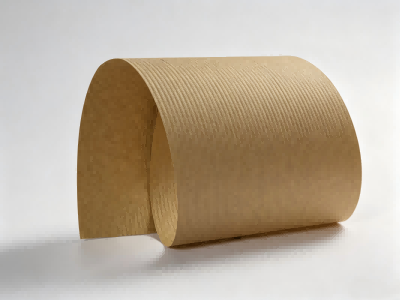
Cellulose is still the default for short-service passenger and light-commercial use, where cheap and stiff wins and the filter is changed before the media is truly taxed. Step up to a synthetic or cellulose-synthetic blend when the application sees moisture, oil mist, or simply runs long enough that cellulose would soften and lose pleat shape. Gradient or dual-density media enters the picture when both high capacity and long life matter at once — heavy trucks, mining, and anything where a clogged filter means a downed machine. The Heavy-Duty Air Filter Paper line is built for exactly that top tier, where a longer service interval pays for the upgraded media several times over.
Read the Specifications That Matter
Three specs tell you most of what you need, and most buyers skip past them. Basis weight, in grams per square meter, sets the substance of the sheet — too light and it lacks capacity, too heavy and it chokes airflow. Permeability, measured in a flow-at-pressure unit, is the flip side: it tells you how freely the clean media breathes before any dust lands. Dust-holding capacity, again, is the one that predicts field life, because it couples efficiency with how much the sheet tolerates before restriction spikes. Efficiency tested to ISO 5011 at a defined particle size is the only efficiency worth quoting; a bare "99%" with no test method behind it is marketing, not engineering. Our Tech-Quality page lays out how these are measured in-house rather than taken on faith, which is the kind of detail a real spec comparison needs.

Don't Ignore Pleatability and Resin
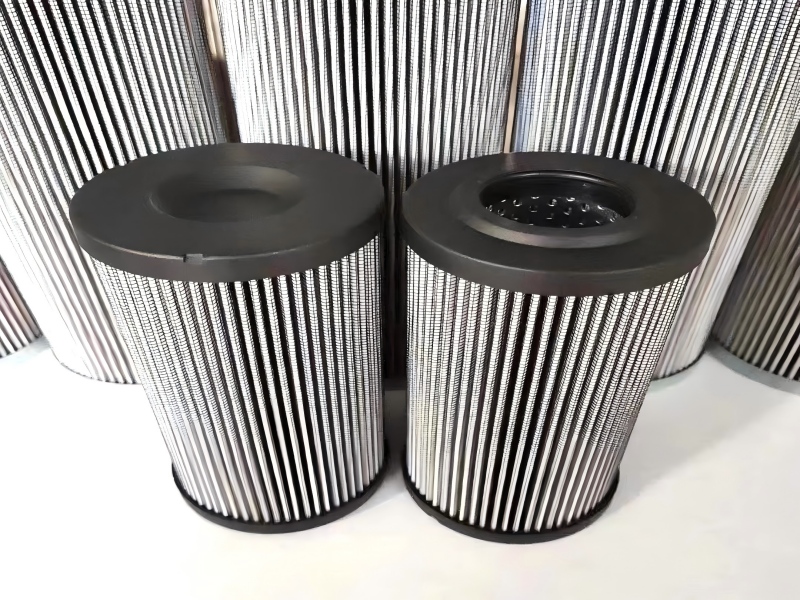
A great flat sheet can still make a terrible filter if it will not pleat cleanly or hold the pleat once installed. Pleatability decides how much media you can pack into a given housing — more media means more capacity in the same can. Resin cure decides whether those pleats stay open under pulse cleaning or engine vibration or simply relax and close. A media that tests well flat but pleats with waves or hot spots will show uneven flow and early local clogging in the real element. This is the unglamorous part of specifying air filter paper, and it is where a lot of "equivalent" grades quietly diverge once they are made into a filter.
A Reality Check Before You Spec
Before committing a grade, run through what a real supplier should be able to hand you:
A graded efficiency curve at a defined particle size and test method, not a single headline percentage.
- A dust-holding capacity figure at a realistic dust load, because that predicts field life better than efficiency alone.
- The basis weight and permeability so the claim can be sanity-checked against the airflow you need.
- Confirmation that the pleat and resin system matches how the element is actually built.
A supplier who can show the measurement method — the equipment, the standard, the test dust — is telling you more than one who just hands over a clean-looking PDF. Specifying air filter paper is less about finding the best media and more about finding the one that fits the dust, the distance, and the downtime your operation can tolerate. Grades that look identical on a quote often behave nothing alike once they are pleated, mounted, and running.
Frequently Asked Questions
How do I know what grade of air filter paper I need?
Start from the dust load and the service interval, not the price. Light-duty short-interval use is fine on cellulose; heavy dust or long intervals push you toward synthetic or gradient. The grade is decided by the worst conditions the filter will actually see, not the average.
What basis weight should air filter paper be?
There is no single right number — it is a balance. Too low and the sheet lacks capacity; too high and clean airflow suffers. The right basis weight is the one that, paired with the permeability and DHC, holds efficiency across your real dust load without choking the engine.
Can I use passenger-car grade media on a heavy truck?
You can, but it will clog early and either restrict airflow or get changed far too often. Heavy trucks and equipment run longer between services in dirtier air, so the media has to carry more capacity and hold shape — that is what the heavy-duty grades are built for.
Does higher efficiency mean shorter filter life?
Not necessarily. Efficiency and dust capacity are separate specs; a well-designed gradient media can be both efficient and long-lived because it uses its full thickness instead of clogging at the surface. Life is set by DHC and structure, not by the efficiency number alone.
Hot News
 Nov 06, 2026
How to Choose Air Filter Paper: 2026 Buyer's Guide
How to choose air filter paper that fits your job: a buyer's guide to matching media type, efficiency, dust-holding capacity and pleatability to the application.
Read More → Nov 05, 2026
What Is Air Filter Paper? Types, Materials & How It Works
Air filter paper (filter media) traps the dust that wrecks engines. Learn the main types—cellulose, synthetic, gradient—and how air filtration media works.
Read More → Nov 03, 2026
The Middle East's Leading International Trade Fair for the Automotive Industry targeting Trade Visitors from Western Asia, Eastern Europe, the CIS and Africa
Read More →- Oct 15, 2026
XINJI HUARUI NON-WOVEN: Serving Global Filter Customers with IATF 16949 System and In-House Testing Capability
Explore XINJI HUARUI's filter paper manufacturing capabilities, backed by IATF 16949 and in-house PALAS and SEM testing. With six production lines and custom specifications, the company serves global filtration customers. Request a product catalog or technical data.
Read More →


Need Help?
Tell us about your application, product requirements and volumes. Our sales team will reply within 24 hours.